Creatives that perform.
Not just look good.
The challenge
The fitness app market is one of the most visually saturated spaces in paid social. Everyone is running ads, everyone has UGC, everyone has hooks.
My work spanned multiple fronts: Figma, AI tools, and video editing, producing an average of 25 creatives per week and delivering strong paid social results, with top creatives generating over $2M in total spend at above 40% ROI.
The fitness app market is one of the most visually saturated spaces in paid social. Everyone is running ads, everyone has UGC, everyone has hooks.
My work spanned multiple fronts: Figma, AI tools, and video editing, producing an average of 25 creatives per week and delivering strong paid social results, with top creatives generating over $2M in total spend at above 40% ROI.
Top 3 scaling video ads
My role
When I joined Welltech, I was one of the first on the team to integrate Figma into our workflow. I saw it as an opportunity to do more than just improve delivery speed, so I built the full WalkFit brand system from scratch, creating a single source of truth the whole company had been missing. The new assets rolled out across all socials and the main website. The ASO team then A/B tested the updated app icon on the App Store and Google Play, which resulted in 10%+ uplift in installs. Not bad for a side project.
When I joined Welltech, I was one of the first on the team to integrate Figma into our workflow. I saw it as an opportunity to do more than just improve delivery speed, so I built the full WalkFit brand system from scratch, creating a single source of truth the whole company had been missing. The new assets rolled out across all socials and the main website. The ASO team then A/B tested the updated app icon on the App Store and Google Play, which resulted in 10%+ uplift in installs. Not bad for a side project.
On the AI side, I integrated generative tools into my own workflow and produced fully AI-generated content up to 60 seconds long. As part of the company's internal AI research group, I investigated emerging video and image tools and translated findings into documentation and workshops for the motion design team, making the whole process faster and more consistent.
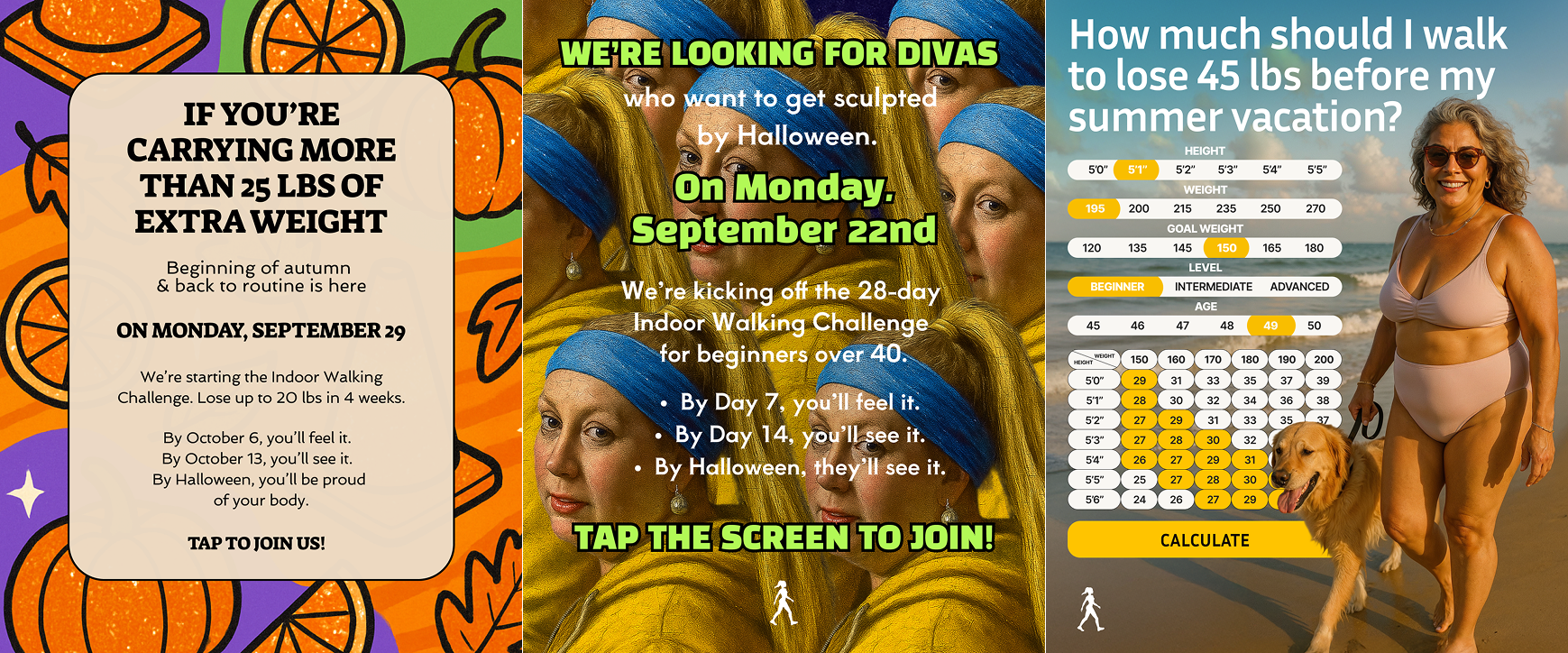
Top 3 scaling static ads
thank you :)